English
As a quarry manager, aggregate producer, or process engineer, you’ve likely faced issues with inconsistent production or equipment wear in your vertical shaft impact crusher (VSI). Throughput in a VSI is directly influenced by feed size and consistency—critical factors that directly impact your profitability, especially in the high-demand quality aggregate environment of 2026.
This guide explores five common feed-size mistakes that could be throttling your VSI's efficiency and provides actionable insights to resolve them, ensuring smooth operations, increased production, and reduced wear on your machinery.
Vertical shaft impact crushers, commonly known as VSIs, operate on the “Rock-on-Rock” or autogenous crushing principle. This process not only crushes but also shapes aggregate, producing the sought-after cubicity critical for creating premium-grade concrete and asphalt sands.
However, feed size is the most overlooked yet vital determinant of VSI performance. When feed gradation is inconsistent or improperly sized, you risk losing both throughput and the cubicity your high-value clients demand. A stable, well-graded feed ensures a consistent autogenous crushing environment, optimizing both efficiency and profitability.
A feed gradation that includes 30-40% fines (material already under the discharge size) leads to the “cushioning effect.” This occurs when the dust cloud within the crushing chamber effectively diminishes the collision impact energy between rock particles.
Reduced material fracture rates.
Increased production of unwanted dust instead of cubical aggregate.
Lower throughput performance, with the central rotor requiring higher work input.
Prioritize scalping to eliminate fines from entering the VSI. Install pre-screens or grizzly feeders before material reaches the crusher to filter out undersized particles that contribute to cushion formation.
Pro Tip: Regularly inspect and clean your scalping equipment to prevent clogging and ensure fines separation efficiency.
Oversized rocks exceeding the rotor inlet size are a silent crusher killer. They overwork critical components like the main shaft and bearings, reducing your VSI’s lifespan.
When large rocks enter the chamber, they create surge-load conditions, leading to:
High amp draw by the motor.
Rotor destabilization, vibrating the entire machine.
Substantial downtime and costly repairs to rotor wear parts.
Use calibrated screens and belt systems to keep feed within the VSI’s design limits. Single out rocks over 5mm above the maximum inlet size—they create imbalance vibrations that spiral into performance inefficiencies.
Insider Tip: High-efficiency vertical shaft impact crushers are precision machines. Remedying oversized feed errors upfront pays off in both uptime and rotor longevity.
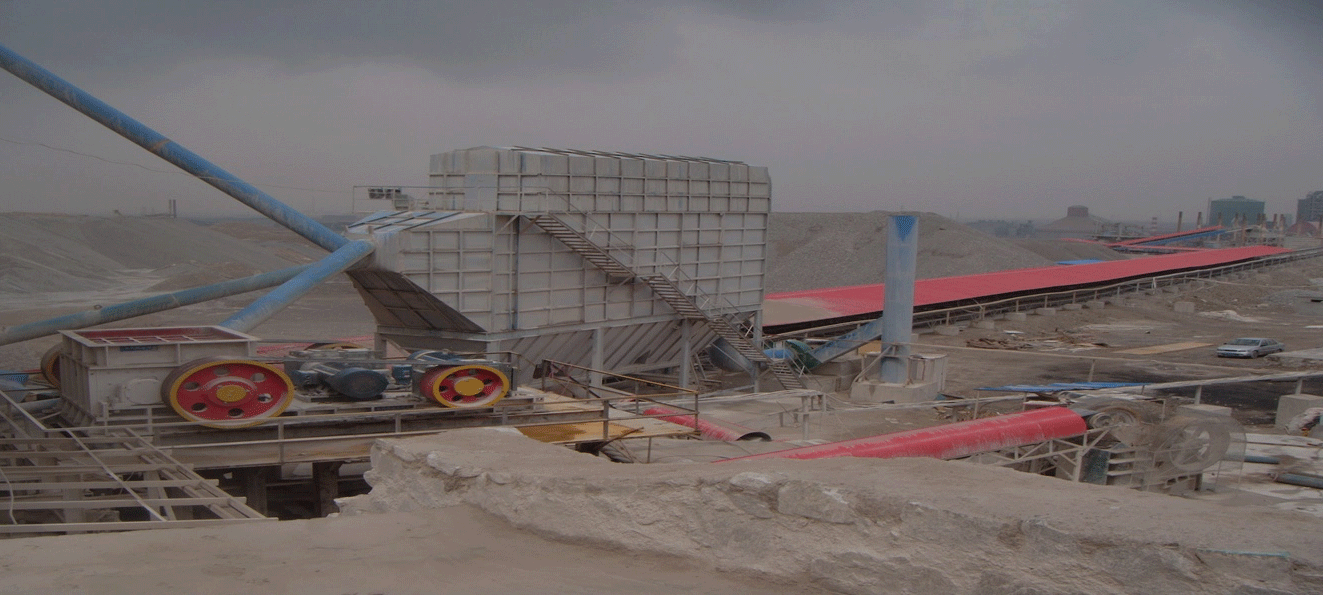
An uneven feed spread—where larger rocks flow to one side and smaller particles to the other—causes uneven wear on rotor tips. Over time, this imbalance leads to costly disruptions, as well as decreased material shaping quality.
Compromised cubical shape production.
Irregular wear patterns on rotor parts, drastically reducing operational longevity.
The key is centralized feeding: Ensure the “feed eye” on your VSI distributes material evenly across the rotor. Installing a feed distribution mechanism, such as a bifurcated chute, encourages balance and enables the VSI to maintain an efficient “autogenous bed.”
The “cascade feed” is a secondary input that redistributes material thrown from the rotor back into the crushing zone. Achieving the optimal cascade ratio (15-20%) increases throughput and minimizes the rotor’s energy load.
Failing to adjust the cascade ratio often leaves too much strain on the primary feed, compromising efficiency and contributing to wear.
Adjust your VSI settings to maintain a consistent cascade flow, bearing in mind the specific gradation and throughput demands of your production line. Monitor the rotor-to-cascade balance by inspecting wear patterns; even a marginal adjustment can yield significant gains in throughput.
Feeds with high clay or moisture content can create monumental hauls for a VSI. Moisture clogs the rotor ports and produces material build-up that eventually leads to a complete production slowdown.
Dry the Material: Consider pre-drying particularly moist feedstock.
Adjust RPM: Certain premium vertical shaft crusher suppliers recommend increasing rotor RPM temporarily to “sling” damp material before serious build-ups occur.
Scalping with Drainage: Installing drainage mechanisms on pre-screens can remove excess moisture before material reaches the crusher.
Answer: The optimal reduction ratio for a VSI is typically 2:1 or 3:1. Wanting more reduction (6:1 or higher) taxes the rotor and sacrifices both wear part life and material quality. If you need significant reduction above 3:1, pair your VSI with a jaw or cone crusher in a pre-crushing role.
Feed size mistakes—whether too fine, oversized, segregated, improperly cascaded, or overly damp—are among the most common bottlenecks in VSI operations. By making minor adjustments to your feed gradation and optimizing the consistency of material flow, you can unlock your VSI’s full production versatility while reducing wear part replacement costs.